 Genbaro
How Faceless Japanese Artists Perform Live (Ado, amazarashi)
Ado's box, amazarashi's sheer screen, Natori's backlighting. How faceless Japanese artists stage their concerts, plus the etiquette to follow when you go.
Pro tip Don't chase the front row. Screen and lighting shows sometimes look better from the second-floor seats.
Plenty of Japanese artists work without ever showing their faces. So how does a faceless artist perform live? Going by real concert reports, there are four main approaches: singing inside a structure on stage, singing behind a sheer screen, hiding the face with lighting, and showing the face only at the venue. This post only covers cases confirmed in music-media concert reports and interviews.
Why are there so many faceless artists in Japan?
Much of it comes from music culture that started on the internet. In an interview with The Hollywood Reporter, Ado calls herself an utaite (歌い手, someone who posts sung covers) more than an artist. She explains that people who uploaded vocaloid covers on Niconico used nicknames instead of real names and used anime-style drawings as icons. For Ado, who felt insecure about her looks, this culture was "finally something I could do."
The reasons differ from person to person. In a 2019 Model Press interview, Koresawa (コレサワ) said that showing her face would make everyday things like an ordinary date or chatting with friends difficult, and she felt she then couldn't write songs from daily life. So a bear character, Reko-chan (れ子ちゃん), handles her visuals.
Silhouette inside a box: Ado
The box on stage is the symbol of Ado's concerts. The Hollywood Reporter calls it the "Ado box" and describes her singing without showing herself inside a shadowed metal box on stage. The same article also notes that photos and video are not allowed at her shows.
The box staging changes a little from show to show. According to a Real Sound report on her July 2026 Nissan Stadium concert, the screen split open to reveal a blue box, and at one point she sang lying on the floor inside it. Later she came out of the box, climbed to center stage and sang while dancing, and the writer noted that "even as a silhouette alone, she looked like she was having fun." Even outside the box, you see a silhouette, not a face.

Behind a sheer screen (shamaku, 紗幕): amazarashi and Rokudenashi
A sheer screen, shamaku (紗幕) in Japanese, is a thin cloth. Project light on it and images appear; turn on lights behind it and you can see a person through it. It hides the face while letting visuals and lyrics show the world of a song, which is why many artists use it.
- amazarashi: A Real Sound report on their December 2017 hikigatari (弾き語り, solo with guitar) show describes a black shamaku hanging over a semicircular stage, and when the lights went out, the faint silhouette of vocalist Hiromu Akita could be seen through the screen. The same article names the visuals and typography (lyrics as text) projected on the shamaku in front of the stage as a hallmark of amazarashi's live shows.
- Rokudenashi (ロクデナシ): A music project led by vocalist Ninjin (にんじん). Real Sound's review of "六花" sums up the 1st and 2nd one-man shows as "a total art form where shamaku staging and Ninjin's emotion intersect," and says they were carried as far as Seoul, Taipei, Macau and Shanghai.
- Eve: According to a Real Sound report on his first Budokan show in 2022, CG visuals were projected on the shamaku in front of the stage at the opening, and lyrics appeared on it during songs. In "アウトサイダー" the screen dropped, and the band and Eve became clearly visible. It's an example of using the screen for a dramatic moment rather than leaving it up the whole time.

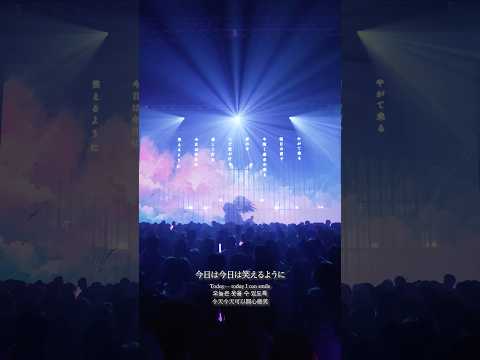
Backlight and dim lighting: Natori and ZUTOMAYO
You can also hide a face with lighting alone, no screen needed.
- Natori (なとり): Real Sound describes Natori as an artist who doesn't show his face and appears as an illustration in music videos, cover art and merchandise. According to the official Sony Music live report on his first Budokan show in February 2026, backlighting is the default even live, so you can't read his expression, and what appears on the big screen is a silhouette too. A LiveFans report on the final show of "劇場〜再演〜" describes the crowd erupting when a silhouette appeared beyond the shamaku, so he uses the screen and lighting together.
- ZUTOMAYO (ずっと真夜中でいいのに。): A 2019 Real Sound report on vocalist ACAね's first full-scale live show wrote that "the lighting was dim, and you could barely see her expression." But a Real Sound report on the 2026 tour named "lighting that shines directly on the stage, unlike usual" as a change this time. That means the staging can change from tour to tour.
Whether you can see a face from the front row depends on your seat and the staging.


Face shown only at the venue: Koresawa
Some artists don't hide their faces on stage at all. The profile in a 2019 Model Press interview says Koresawa doesn't show her face in the media and that "live shows are the only place to see her bare face." In media appearances she reportedly wears a Reko-chan mask. In the same interview she said first-time fans sometimes get nervous wondering "what kind of face will she have." The point of this approach is a face that only people who came to the venue have seen.
At a glance
| Artist | Approach | Source |
|---|---|---|
| Ado | Sings inside a box on stage, mostly a silhouette | The Hollywood Reporter, Real Sound (2026 Nissan Stadium) |
| amazarashi | Visuals and lyrics on a shamaku in front of the stage, silhouette beyond the screen | Real Sound (2017 show) |
| Rokudenashi | Shamaku staging | Real Sound ("六花" review) |
| Eve | Opens with shamaku visuals, screen drops during a song | Real Sound (2022 Budokan) |
| Natori | Backlighting by default, silhouette on the screen too | Official Sony Music report (2026 Budokan) |
| ZUTOMAYO | Dim lighting (2019), more direct lighting on the 2026 tour | Real Sound |
| Koresawa | Face hidden in the media, bare face only at live shows | Model Press (2019) |
Etiquette at a faceless artist's concert
Hiding the face is part of how these artists work, so etiquette matters even more than at a regular concert.
- Don't take photos or record. Japanese concerts often ban photography by default (Why Are Japanese Concerts Photo-Free?). For example, the notice for Natori's 2025 tour banned all shooting and recording during the show, video or photo, and said anyone caught would be removed on the spot.
- Don't spread the faces you saw at the venue. Posting a bare face or a glimpse through the screen on social media, as text, a drawing or a photo, undermines the way the artist has protected their identity. Don't share what others post either.
- Read the notes (chūi jikō, 注意事項) for every show. The rules differ from tour to tour even for the same artist. The Natori tour notice above banned bringing in or using binoculars and similar items and also banned waiting around before and after the show (iri-machi 入り待ち and de-machi 出待ち). Use binoculars only when the notes allow them.
- Lower your expectations about seats. Even in the front row, you aren't guaranteed to see a face. These concerts are stages where visuals, lighting and screens work together, so seats on the second floor or in the stands, where you can see the whole stage, can sometimes be better for enjoying the staging.
Other basic etiquette is collected in Japanese Concert Etiquette: The Complete Guide.
Finding faceless artists' concert dates
Open the pages for Ado, amazarashi, Rokudenashi, Natori, ZUTOMAYO, Eve and Koresawa on Genbaro to see the upcoming concerts posted on their official accounts, in date order. If you follow them, you get notified when a new concert appears.
Sources
- The Hollywood Reporter — Ado on Decision to Not Reveal Identity, World Tour and More (2025-08-25)
- Real Sound — Adoが"自分の名前"のもとに解き放ったありのままの姿 日産スタジアムで鳴り響いた新たな物語の号砲
- Real Sound — amazarashi、"ひき算"から生み出されたライブ表現 初の弾き語りワンマンライブレポ
- Real Sound — ロクデナシ『六花』全曲レビュー
- Real Sound — Eveの「現実逃避」という言葉が意味するもの 初の日本武道館公演
- ソニーミュージック なとり公式 — 3rd ONE-MAN LIVE「深海」オフィシャルライブレポート
- LiveFans — なとり『劇場〜再演〜』ファイナル公演レポート
- Real Sound — なとり、初の武道館で証明した"ライブアーティスト"としての真価
- ソニーミュージック なとり公式 — ONE-MAN LIVE TOUR「摩擦」開催にあたり、ご来場の皆様へのお願い
- Real Sound — ずっと真夜中でいいのに。1stライブレポート
- Real Sound — ずっと真夜中でいいのに。『ZOMBIE CRAB LABO』レポート
- モデルプレス — コレサワ インタビュー "顔出しNG"の理由 (2019-12-27)
Ticket vendors and events change their rules often, so check the official guidance again before you apply. Spotted a mistake? Tell us at support@genbaro.com.